|
Here we are in midlife. But what does that mean, really? Is the best really behind us? Let's do some quick math: Average life span for a non-smoking woman: 83 minus average number of years spent with less than optimal health. So, if you've been generally healthy and you are now 60, statistically speaking you have a couple of decades to play with. And maybe you'll be above average and live longer and healthier than that. This is good news. That means that there's still pleny of time to make plans and do some things. The time we have, regardless of the actual number of years in front of us, is finite. If you are like me, you feel a real sense of urgency to make the time count. Maybe you have an idea that you've been thinking about inacting, or some changes you want to make to live a happier, healthier life. Maybe Real Life so far has kept you from going after something you want. You haven't had the time to build out your idea, or you think you don't have the expertise to pull it off, or your enthusiasm for your plan fades a bit after you've had a chance to mull it over a bit. "Get real," your brain says. Or worse, "It's too late to start something new." But your brain lies. Our primative brains evolved to keep us safe and comfortable. That's great if all you want to do is survive. But safe and comfortable equals stagnation. Inertia is Netflix and the same job and the same thing day after day. The good news is that you can outsmart your brain. You can create a plan to learn what you need to know and meet the people you need to meet. Your desire for something else and your willingness to overcome fear and the tools to do so can override your primative brain safe room. But you will have to continually challenge the tendency to retreat to safe and comfortable. This is where coaching comes in. You need someone in your corner to help you manage those thoughts that will try to justify keeping you stuck. Really. Try coaching. You can get the support you need to get your plan, manufacture your propulsion, and make your next 20 years have meaning. Give a free 30-minute session a try and get started on your next two decades.  In a recent visit to my home state, I stayed in an historic hotel that had pictures from early statehood. I was struck by how the white settlers of Oklahoma started with a tent city in the late 1800s and in less than 20 years had built more than one entire city with substantial infrastructure. Most of my hometown of Guthrie, the original capital, was built in about 5 years. They went from dirt to multi-story buildings in the blink of an eye. It got me thinking about what we as individuals can accomplish in our own lives. On the one hand, five years sounds like a long time. But at our age, we can easily look back five years and see where we were and where we are now. And we can imagine that we will be around in five years. Can we envision taking our personal landscape from prairie to the creation of our imagination in five years? Two years? Less? Of course we can. But only if we have of vision of where we want to go. Those of us in midlife may be wondering what is next, or what even is left to do. But now is the time to use our imaginations to create a future by design. What do you imagine for yourself? Do you still have the ability to picture a bright future? Sometimes we may need a little help to fan the flames of dreams we may have put on hold or decided were unattainable. What thing would you do if you knew you would not fail? Coaching can help you find your intentional future. Sign up now for your free session. 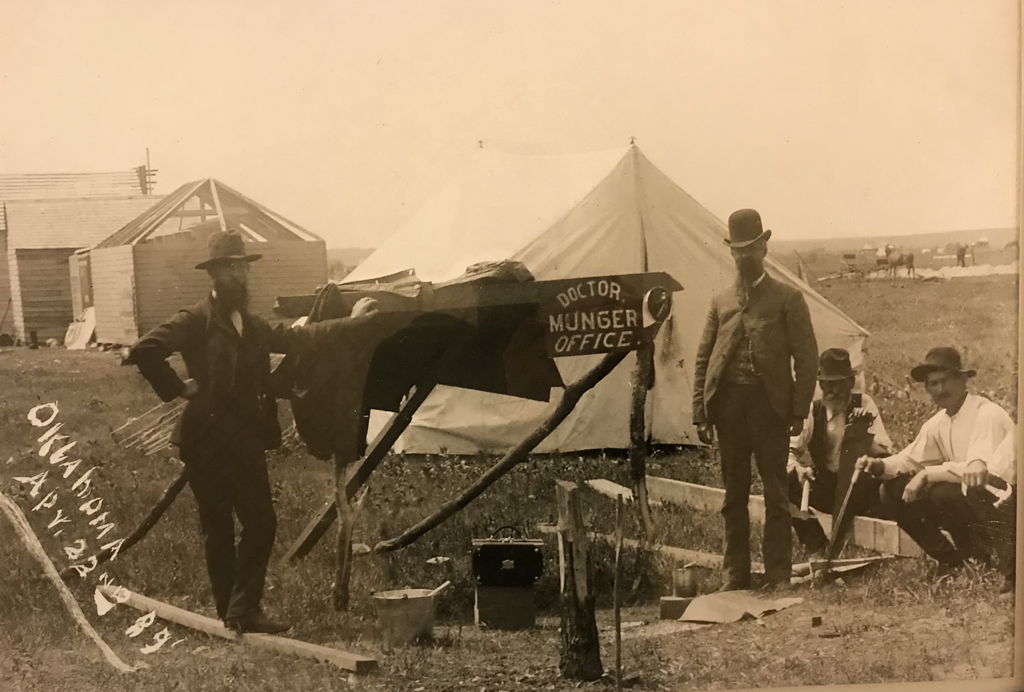 Oklahoma City in 1889 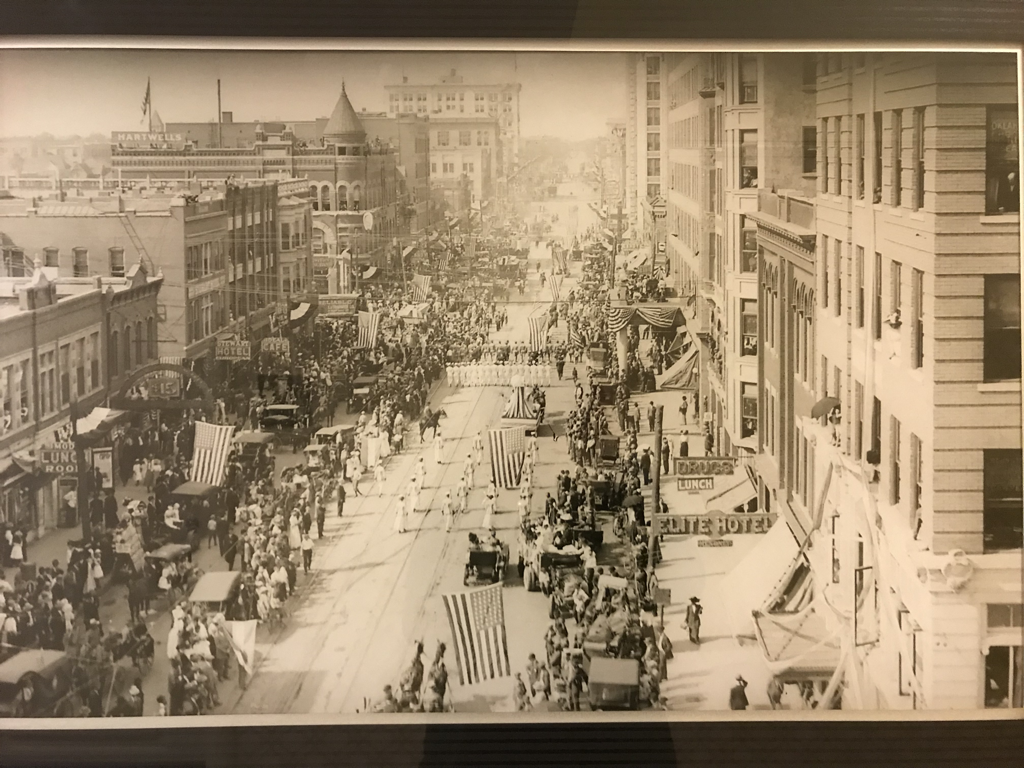 Oklahoma City in 1910  " I knew I was different, but just wasn’t sure why or how…. And certainly wasn’t anyone I could talk to about it…."
"I had a religious upbringing. I was afraid of the spiritual repercussions. At that time I was brought up believing what I was I told..." "All of a sudden, it hit me! I had been married to a man for 30 years and couldn’t figure out what was wrong with me. Why I didn’t feel that way for him..." "I knew most of my life but stuffed it away. Married to a man, twice. Spent ten years on my own. My aha moment came at age 61...." "I've always known yet decided to suppress my feelings. I married a good man. I've not come out as of yet. I feel I've left it too late now to leave and find my hearts desire..." If you found this post, you very well may be a woman who's on the brink of coming out, either to yourself or others. It can be very scary. Coming out is a multistep process. First you recognize and acknowledge to yourself that you are attracted to women. Then there is the decision about whether to tell others and/or act on it. Or maybe you've already acted on it and are now at a place of "Now what?" Maybe lots of guilt. If you have built a life that looks to the rest of the world like that of a straight woman and you imagine coming out, you may be terrified that you will lose everything. Any step of coming out can feel scary or overwhelming. Any step can last a mere minute or many decades. Remember this: Every decision that has brought you to where you are today seemed like the right or most logical decision in that moment. Know this: You can do hard things. You can figure out what to do. You can feel better. Getting coached can help. Click here for a free session and get started.  Oh my gosh, she looks like she needs some self-forgiveness. Let's be honest. We've all done something at some time that we wish we could have do-overs on. A rash decision. A time when we didn't accurately judge how our actions would affect another person. Our brains can give us all kinds of justifications that in hindsight seem crazy. It's happened to me at work. It's happened in my marriage. And as a parent, I have probably a thousand memories of things with my kids I wish I had handled differently. Maybe we rationalize or make excuses for our behavior, but the underlying kernel of self-hatred can be a sandbur in your sock that you just walk around with. [Sandburs are these little rock hard seed pods with vicious spikes that were all over the place in the Oklahoma countryside where I grew up.]
What we really want to do is go back in time and change it. Each of those moments can still, no matter how long ago they were, become raw and painful if we decide to dredge them up and use them as a reason to prove our lack of self-worth. Bleh. So why do our brains do that to us, even years after the fact, when most likely no one is thinking about that episode? It could be that the people we think we harmed are well over it, so why do we go there? Why not just pick the bur out of our socks? Sometimes it feels like our thoughts are thinking us. We don't want to think about that thing we can't stop thinking about. What we think we want is for someone to tell us we are forgiven. And even if we do get that, maybe we still don't believe we deserve it. We think we deserve to be punished, maybe forever. Here's the thing though – All forgiveness is is allowing yourself to stop feeling bad. If you are feeling unworthy or guilty or angry at yourself, you may be on a path of punishing yourself forever. But what's the upside? You can't unring a bell. You can do things to try to make up for it, but in the end, you are the only one who can change your thoughts and decide to feel better. And from a place of feeling better, you can move through the world and take actions that allow you to more fully contribute, and to having a life well-lived. So how do you change your thoughts? Sometimes you might have a lightbulb moment. Maybe you can see someone torturing themselves in the same way, and you wish with all your might that they give themselves some grace and – BING – you see that in you. Again, parenting can do this. We see our kids torture themselves over things they can't undo, and we love them so much we want them to feel better anyway. One time I gave one of my kids a list of suggestions of things he could do to actively repair his karma, since there was nothing he could do to fix the actual situation. He chose to continue to hate himself even when he was offered forgiveness. In time, in his own way, he sorted it out, mostly. But in him, I could see so clearly how we torture ourselves to no greater good. Sometimes you can feel better by just waiting it out and allowing enough other memories to fill the space that you don't think about it so much. It's sort of a passive self-forgiveness. My son couldn't forgive himself until he'd allowed himself to feel terrible for a year. I'm not sure he fully has forgiven himself, but for sure the spikes on his sandbur have gotten a bit smoother and less painful. A more active way to self-forgiveness is by changing our thoughts – going through a process of practicing finding equally true thoughts that feel better. Can you go from "I am despicable" to "I made a terrible mistake" to "I am human" in a day? Maybe not overnight, but you definitely can in time, if you want, and with practice. And you do have to want to. Maybe it feels impossible, but it's not. Maybe you just need some help. Maybe getting some coaching is one concrete step you can take to finding ways to repair your psychic karma and move toward self-forgiveness? Worth a try? 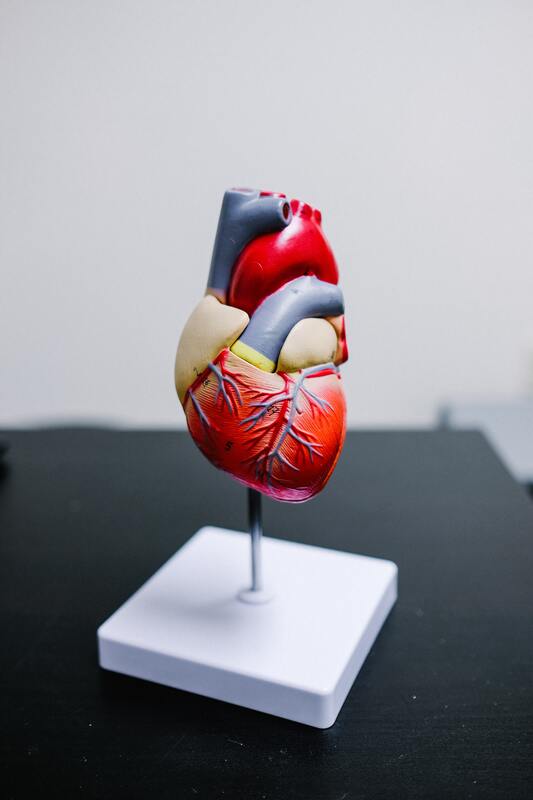 The reason we worry about cholesterol is because of its percieved impact on heart health. Here's a stock pic of a heart on display. I turned 58 last month. A year ago at my well visit to my doctor, my cholesterol for the first time surpassed the magic number of 199. My cholesterol had increased about 65 points over the previous 10 years and was looming from the chart at 237. Boo. [There is a lot of science in the numbers of "good" and "bad" cholesterol, but to illustrate my story, I'm using the total cholesterol number. Trust me, if I'd hit a homerun on good LDL, I'd tell ya!] My doctor began starting sentences with "You're getting to an age where..." Insert eye roll.
In her defense, she's about my age, she's in fabulous shape, and she also has cholesterol issues. She patiently explained that despite my vegetarian diet and my general good health, my genetics are working against me. My mom died from heart disease at the age of 53. I'd kinda hoped I'd dodged the crappy cardovasucular bullet, but alas, it appears I did not. I had a CT scan (some magic way they peer inside your arteries) and we determined that as of last January, I didn't have any plaque buildup. Good news. Given that, plus knowing what I know, and generally wanting to postpone any life sentences that tie me to the pharmaceutical industry, I asked my doc what I could do bring down my number. "Eat oats and flax five times a week," she said. "Consider it done!" I thought. Fast forward to this week. New year, new blood work, after a year of eating oats and flax for breakfast for probably 90% of the time. Hooray! I actually lowered my score by 6%. But... it's still over 199. It's 225. That's still a long way to go. My doctor started giving me that look again. I am an adult and don't have to take any meds if I don't want to, but I honor an evidence-based medical system and will take medications and vaccinations when it appears to be the best answer available. But still. I am buoyed that I actually lowered my cholesterol by 6% in a year. I decided to take my case to Dr. Google to see what else I might do through lifestyle changes before I start going steady with statins to lower my cholesterol. Don't you know it, the answer (surprise!) is diet and exercise. Though I am at a healthy weight, I could also be healthy 10 pounds lighter. And, to be honest, my regular exercise regimen had lapsed a bit. Those of us lesbians in midlife have probably all heard that we need to do weight bearing exercise to maintain bone health. Cholesterol can improve with aerobic exercise, so... It's time to get going on this. Science says I should aim for 3.5 hours of cardio a week to improve my cholesterol numbers. Totally doable. I told my doc I'd bring my cholesterol down in 6 months. Can I? Well, I'm not sure about the numbers, but the weight loss and exercise is totally mine to do or not do. Are you working on a health goal? I recently wrote Practical Change with Design Thinking: Lesbian Edition (click here to get it!). Creating an exercise plan or making adjustments to your diet are perfect projects to address with design thinking. Are you in? [It's it a lot easier to tackle change with objective accountability. Consider a free coaching session to craft a plan explore how coaching might help you get where you want to go. |
Archives
January 2024
|
 RSS Feed